English
 Español
 Russian

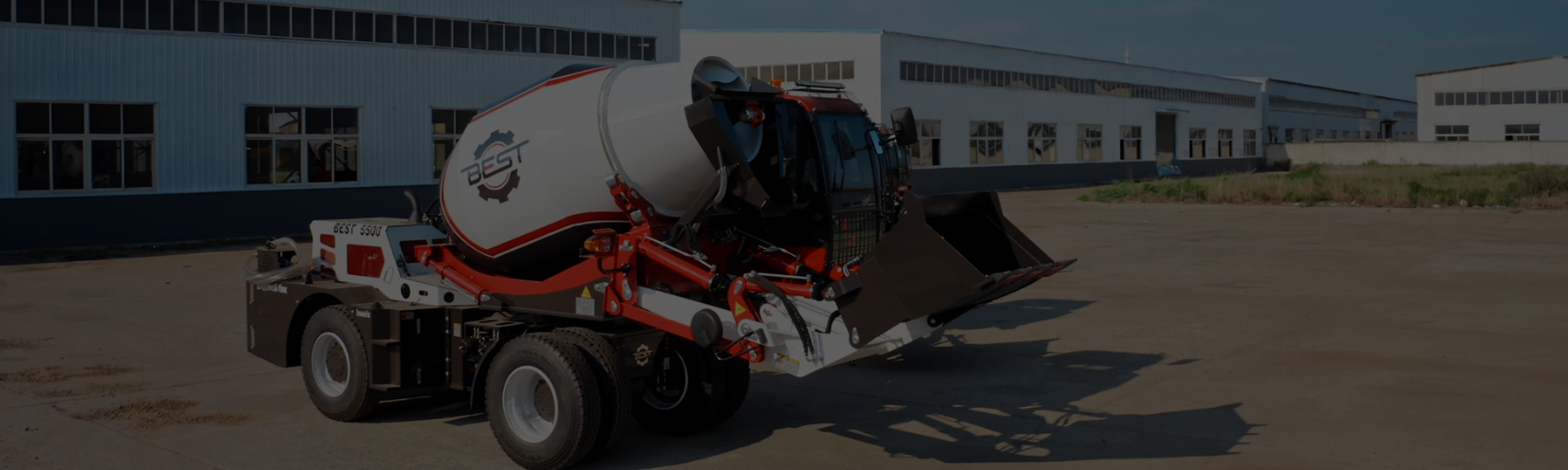
In modern construction engineering, the pressure on project timelines, labor costs, and material logistics has made equipment efficiency more important than ever. Compared with traditional concrete supply systems that rely on separate batching plants, loaders, and transport trucks, the self loading concrete mixer truck has become a highly efficient alternative due to its integrated design and strong adaptability to real job site conditions.
This machine integrates loading, weighing, mixing, transporting, and discharging into one unit, allowing a complete concrete production cycle to be finished without relying on external equipment coordination. As a result, construction becomes more continuous, less affected by logistics delays, and significantly more controllable in terms of cost and scheduling. In addition, on-site mixing reduces dependency on ready-mix plants, which is particularly important in regions where infrastructure is weak or transportation distances are long.
From an engineering application perspective, the self loading concrete mixer truck is not designed for ideal conditions, but for real construction environments. With off-road driving capability, reinforced chassis, high ground clearance, and strong torque output, it can operate directly in rural roads, muddy foundations, mountainous areas, mining zones, and remote infrastructure projects. This makes it especially suitable for projects where traditional equipment cannot operate efficiently or where construction conditions are highly variable.
Another key advantage is operational efficiency. In most cases, only one operator is required to complete the entire workflow. This significantly reduces labor dependency, improves manpower utilization, and makes the equipment particularly attractive in regions where skilled labor is limited or expensive.
Beyond equipment structure, the real value of the SITC series lies in its application-oriented design. The SITC2500 to SITC7500 range is developed based on actual engineering scenarios rather than simple capacity scaling. Each model corresponds to a specific construction environment, workload intensity, and project type.
1. SITC2500 & SITC3200 – Compact Solutions for Restricted and Dispersed Construction Environments
These models are designed for highly flexible operation in small-scale and restricted job sites where maneuverability is more critical than output volume.
Applicable construction environments include:
· Rural housing construction projects in villages or agricultural areas
· Small residential buildings in suburban or low-density regions
· Farm infrastructure development such as barns, storage facilities, and irrigation-related construction
· Scattered maintenance and repair works in municipal or rural road systems
· Mountainous or hillside construction sites with narrow access roads and uneven terrain
· Temporary construction points where mobility and quick deployment are required
In these environments, job sites are often disconnected, road conditions are poor, and working space is limited. Large equipment cannot easily enter or operate efficiently. Therefore, SITC2500 and SITC3200 are optimized for accessibility, mobility, and quick deployment, allowing contractors to complete concrete work in locations that would otherwise require manual or inefficient methods.
2. SITC4500 & SITC5500 – Mainstream Models for Medium-Scale Construction Projects
These models represent the most balanced and widely used solutions in real engineering projects, offering a combination of productivity, stability, and cost efficiency.
Applicable construction environments include:
· Residential housing development projects in urban expansion zones
· Medium-sized commercial and public building construction sites
· Township infrastructure works such as schools, roads, drainage, and public facilities
· Small industrial plants and factory construction projects
· General municipal engineering projects including road repair and urban maintenance
· Contract-based construction projects with continuous but moderate concrete demand
These job sites typically require steady concrete supply over extended periods rather than short bursts of high output. The key challenge is maintaining consistent production while controlling fuel consumption and operational costs. SITC4500 and SITC5500 are widely adopted because they provide the best balance between efficiency and economy, making them highly suitable for contractors, construction companies, and equipment rental businesses.
3. SITC6500 & SITC7500 – Heavy-Duty Solutions for Large-Scale and Continuous Engineering Projects
These models are designed for demanding construction environments where high output, continuous operation, and large-scale material supply are required.
Applicable construction environments include:
· Highway and expressway construction projects requiring continuous concrete paving
· Large-scale real estate and commercial development projects
· Bridge construction, tunnel engineering, and major civil infrastructure works
· Mining operations and quarry-related infrastructure development
· Remote construction projects where no ready-mix concrete plant is available
· Large industrial zone development and long-term infrastructure projects
In these scenarios, construction scale is large, working cycles are long, and interruption is costly. The primary requirement is not mobility but continuous production capacity. SITC6500 and SITC7500 significantly reduce batching cycles and transportation frequency, ensuring stable and uninterrupted concrete supply even under high-intensity working conditions.
Engineering Selection Logic: Matching Equipment with Real Job Site Conditions
From a procurement and engineering planning perspective, selecting a self loading concrete mixer truck should never be based solely on capacity. Instead, it should be evaluated based on a combination of:
· Job site accessibility and terrain conditions
· Daily concrete demand and project scale
· Construction duration and workload continuity
· Availability of labor and logistics support
· Investment budget and expected return cycle
A properly matched model improves equipment utilization, reduces idle time, and increases overall project profitability. Conversely, incorrect sizing may result in underutilization or insufficient production capacity, both of which directly affect project efficiency.
Global Market Demand and Investment Value
With the continued expansion of global infrastructure development, especially in emerging markets across Africa, Southeast Asia, and South America, the demand for self loading concrete mixer trucks is increasing rapidly. In these regions, the lack of stable ready-mix supply and challenging terrain conditions make integrated equipment a highly practical and cost-effective solution.
For contractors, construction companies, and equipment rental operators, this type of machine is not only a production tool but also a long-term investment asset that can be deployed across multiple projects with high utilization rates.
Conclusion
The SITC self loading concrete mixer truck series is designed to provide a complete engineering solution across different construction scales—from small rural housing projects to large infrastructure developments. Each model is engineered to match real-world job site conditions rather than theoretical capacity requirements.
If you are currently planning a construction project or evaluating equipment investment options, we can provide tailored recommendations based on your project environment, workload requirements, and budget structure to help you select the most efficient and profitable SITC model